
Mathematicians are confused most of the time
Something they never tell you in math class

Being confused isn’t a sign you’re bad at math. It’s a sign you’re doing math.
Nobody tells you this. So you struggle for hours, maybe days, or even weeks and finally you quit, assuming everyone else finds it obvious.
(They don’t. I can confirm. My confusion is well-defined for all x.)
I spent the whole weekend writing this issue to explain what the work actually looks like.
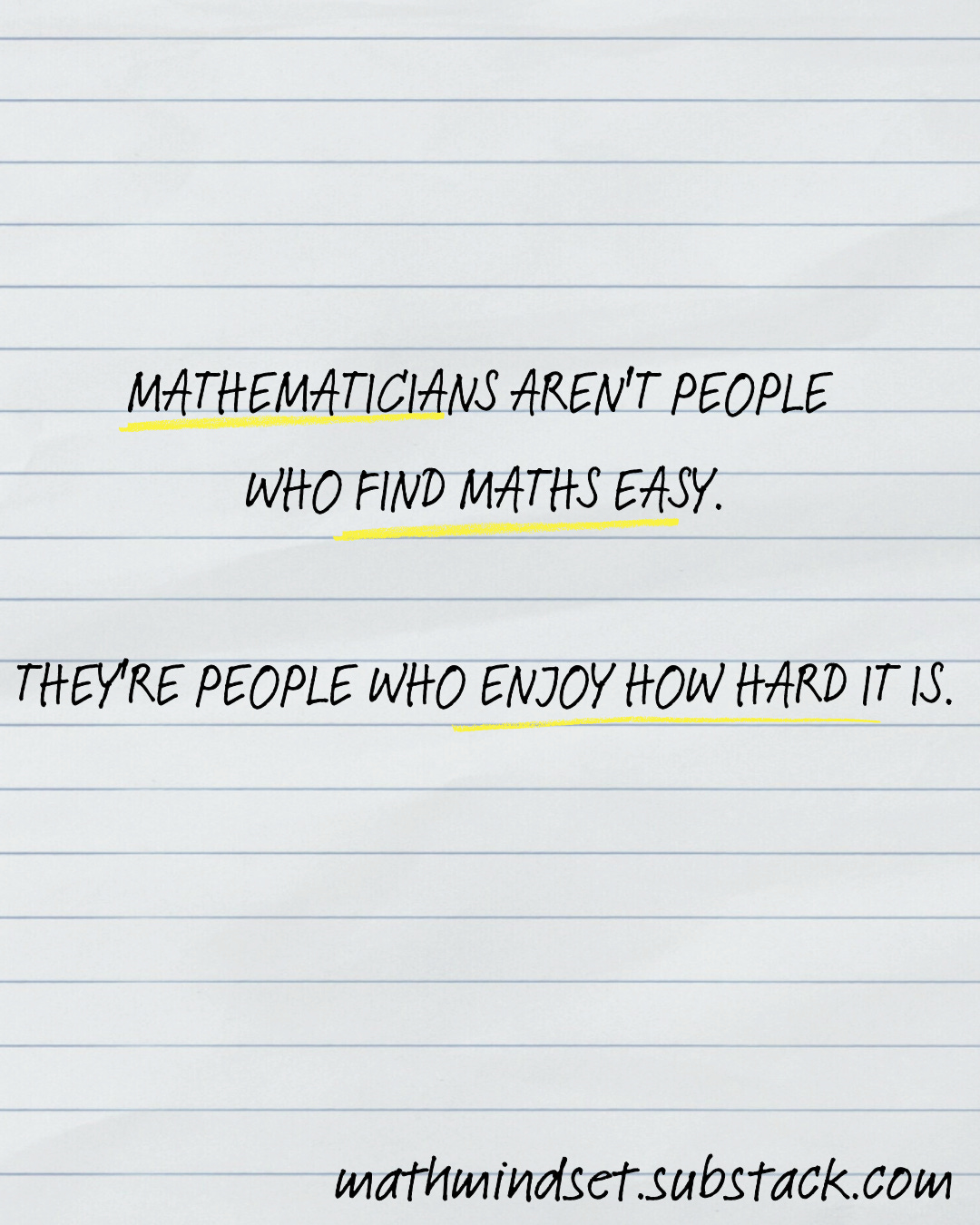
This quote is usually credited to Matt Parker
The myth: math ability shows up early, or never
Most people believe that mathematics is done by a small number of unusually gifted minds who see the answer where everyone else sees fog. Either you have that vision or you do not, and school is where you find out which group you are in.
It is a strangely durable belief, and it is easy to see where it comes from.
Every proof you have ever read is a finished artifact.
Clean, linear, inevitable-looking. Step follows step, nothing is wasted, and no page anywhere records the eleven attempts that went nowhere first. The published proof is the edit, not the draft.
One of the most famous mathematicians of all time, Gauss made this a personal motto: few, but ripe results.
He published only what he considered polished and left the scaffolding out on principle.
Two centuries of textbooks inherited the habit. So students meet mathematics exclusively in its finished state and draw the obvious conclusion: whoever wrote this never struggled, and I am struggling, therefore this is not for me.
What that belief produces:
Adults who introduce themselves with “I’m not a math person.” a sentence almost nobody says about reading or writing
Talented students quit at the first failed exam. They confuse “I don’t understand this yet.” with “I can’t do this!” One is temporary. The other is a decision.
Practitioners who stay silent because they assume their insight is obvious to everyone more expert than them.
Notice the pattern here. The myth is not sustained by evidence that some people cannot do mathematics. It is sustained by the systematic deletion of the evidence that everyone struggles.
We hide the process, then wonder why people conclude they lack a gift.
What the work actually looks like
Pull back the curtain on almost any famous result and you find the same thing: a long stretch of struggling and being confused.
Andrew Wiles is the British mathematician who worked on Fermat’s Last Theorem for roughly 7 years, mostly in secret. His description of research has become the standard one in the field, and it is worth holding onto: you enter a dark mansion, you spend months bumping into furniture, and eventually you find the light switch. Then you walk into the next dark room and start again. When he finally announced the proof in 1993, a reviewer found a serious gap. It took another year, and help from Richard Taylor, to close it.
That is not the story of a man who saw the answer. That is the story of a man who tolerated confusion longer than anyone else was willing to.
Then there is the social side, which the lone-genius myth erases completely.
Paul Erdős published around 1,500 papers with roughly 500 co-authors. He had no home, no job, and no bank account. He arrived at colleagues’ doors, announced that his brain was open, and worked on their problems. Mathematics has a running joke about your Erdős number precisely because the collaboration graph is so dense.
Boole, taught himself from Lagrange and Laplace after full days of teaching schoolchildren, with no degree and no mentor.
The Polymath project, started by Timothy Gowers in 2009, have produced published theorems through open online collaboration among dozens of contributors.
None of this looks like solitary vision. It looks like persistence, conversation, and a very high tolerance for being stuck.
Confusion is a skill, and skills are trainable
If confusion is part of the process, then the useful question stops being
“Am I smart enough?” and becomes “What do I do while I am stuck?”
That question has a real answer, and George Pólya wrote it down in 1945.
His four-step method is still the best description of mathematical thinking in print, and it transfers directly to engineering, debugging, and product work.
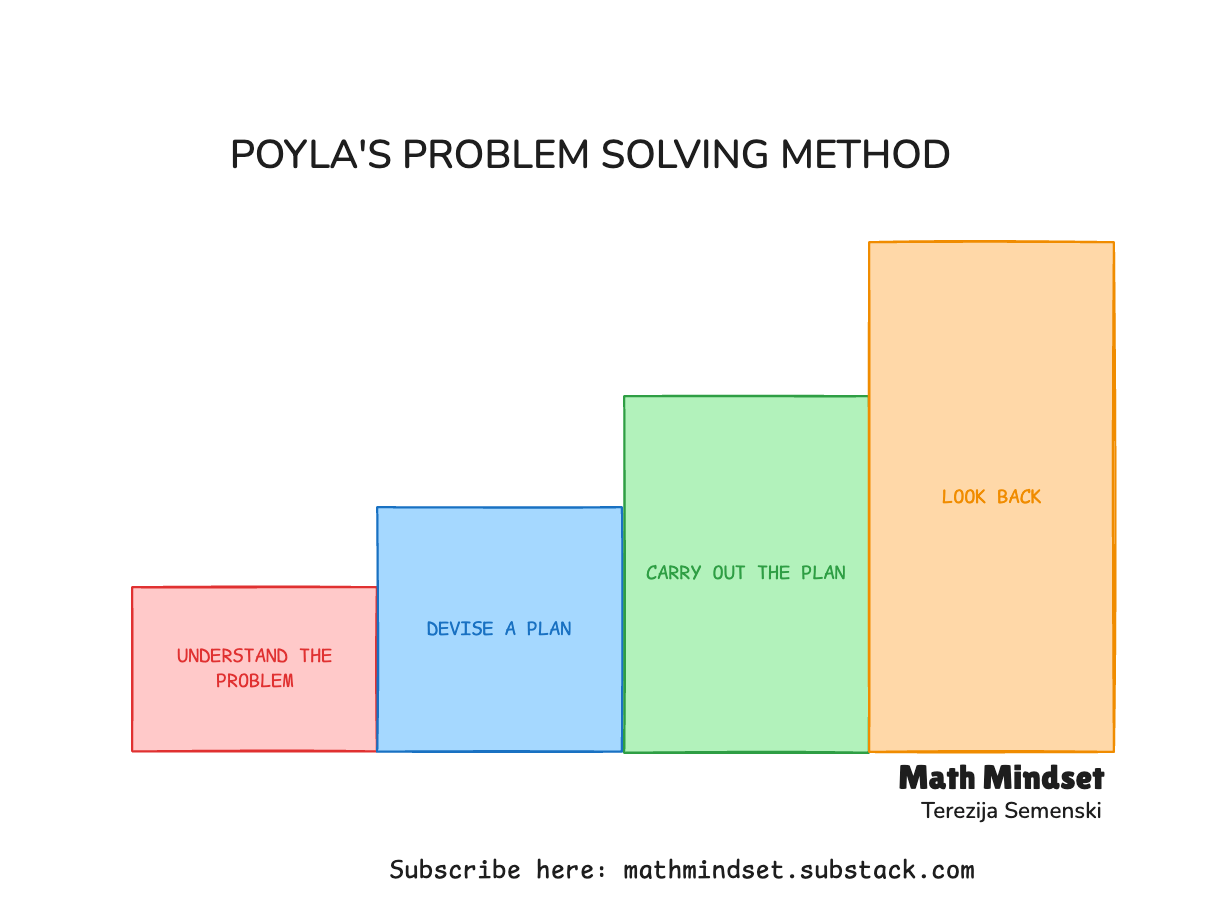
Understand the problem
Restate it in your own words. What is unknown, what is given, what is the condition connecting them? Most failed attempts are attempts on a problem the person never actually pinned down.Devise a plan
It is a process in which you find the connection between the data/information you are given and the unknown. Have you seen a related problem? Can you solve a simpler version, drop a constraint, work backwards from the goal, or find a special case that reveals the pattern? This is where the heuristics live, and they are learnable rather than innate.Carry out the plan
Execute, checking each step as you go. Distinguish clearly between what you have verified and what you are hoping is true. Most bugs, mathematical and otherwise, hide in that gap.Look back
The step almost everyone skips. Can you check the result? Can you check the argument? Can you derive the result differently? Can you see it at a glance? Can you use the result, or the method, for some other problem?
This is where a solved problem turns into transferable skill instead of a one-off.
Results that showed effectiveness of the Polya’s problem-solving method
Researchers conducted few studies to investigate the effectiveness of the Polya’s problem-solving method in improving students’ mathematical problem-solving abilities.
Lee & Chen (2015) studied the effects of Polya questioning instruction for geometry reasoning in junior high school. Students who received instruction based on the Polya method demonstrated significantly improved geometry reasoning skills compared to those who received traditional instruction (Lee & Chen, 2015).
Namgyal & Kongmanus (2018) implemented the mathematics instructional package incorporating Polya’s steps, including video clips, to enhance the problem-solving abilities of 6th-grade students in Bhutan. The study revealed that students who received the instructions significantly improved their problem-solving abilities compared to the control group. (Namgyal & Kongmanus, 2018).
Lastly, Gopinath & Lertlit (2022) examined Polya’s model in solving mathematics problems by 7th grade students. The study found that incorporating Polya’s problem-solving method improved students performance based on solving problem questions in mathematics. (Gopinath & Lertlit, 2022)
3 books that show you the work behind the curtain
If you want one project for this summer, make it this: read three books that put the process back on the page. They are short, they are not textbooks, and none of them require you to solve anything.
Read them in this order. The sequence I choose is deliberate: the first one shows you the people, the second shows you the method, and the third one shows you why any of it matters.
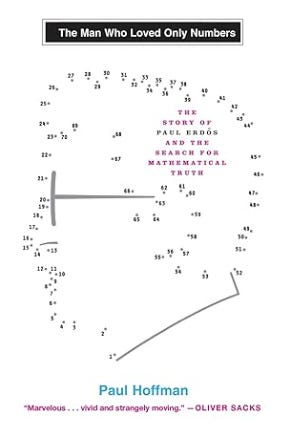
The Man Who Loved Only Numbers, Paul Hoffman, 1998
Erdős’s life, told properly. No home, no possessions, 1,500 papers, 500 collaborators, and a door-to-door working life that reads like a road novel.
It is funny and it is moving, and it is the best portrait anywhere of mathematics as a social activity rather than a solitary gift. Start here, because it dismantles the lone-genius myth through story rather than argument.
Roughly 300 pages. The easiest read of the three, and the best one for a deck chair.
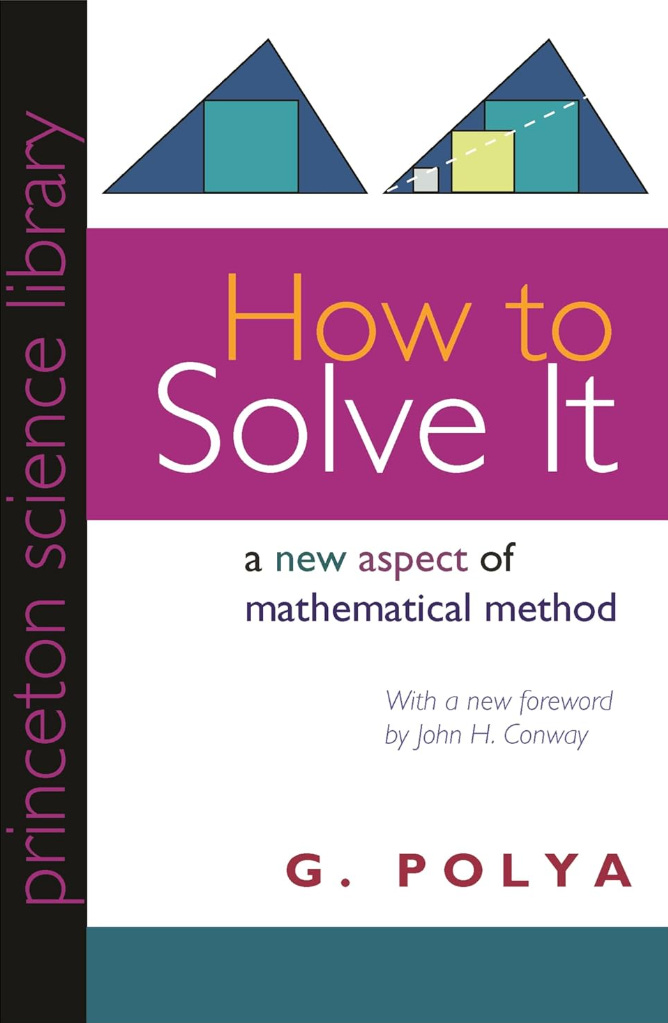
How to Solve It, George Pólya, 1945
The four-step method above, expanded into a full working system, plus a dictionary of heuristics you can apply the same afternoon you read them.
Eighty years old and not superseded. If you write software, note how much of it is really a book about debugging: understand the problem, find a related one, check what you actually verified, then look back and generalise.
Around 250 pages, but built for dipping into rather than reading straight through.
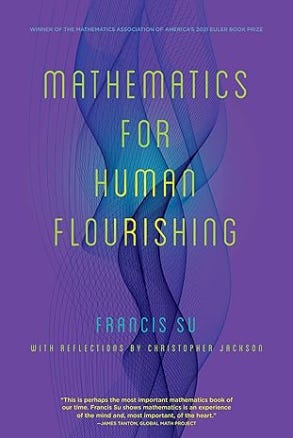
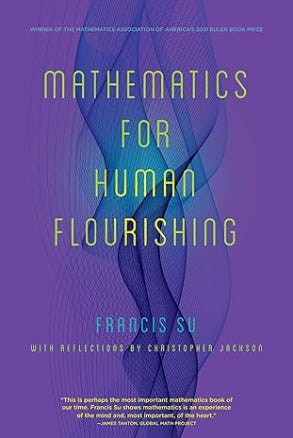
Mathematics for Human Flourishing, Francis Su, 2020
Su argues that mathematics serves basic human desires: play, beauty, truth, justice, love. Each chapter is built around one of them, and the book is threaded with his correspondence with a man studying mathematics in prison.
This is the book to hand to anyone who was wounded by math class and still carries it. It is also the strongest available answer to the question of why any of this deserves a place in an AI-saturated curriculum.
Around 250 pages. The one most likely to change how you talk about the subject.
A note on why I suggest reading these three books and not a stack of textbooks. Pólya’s heuristics were useful before computers existed and they will be useful after the current generation of models is obsolete. My advice is opposite of what AI influencers tell you these days and it’s simile and straigforward:
Learn the things that do not change.
Why the myth is finally dying
For most of history the process genuinely was invisible. You saw the published paper because the notebook stayed in a drawer.
That is changing fast. Open-source repositories carry their whole commit history, failed branches included. Research preprints and public review threads show arguments being corrected in the open. Mathematicians post half-finished problems on blogs and forums and let strangers pick at them. The Polymath projects made the messy middle a formal method rather than an embarrassment.
The generation learning technical work now will be the first to see the drafts as a matter of course, and that quietly removes the myth’s foundation. It is much harder to believe in effortless brilliance when the version history is public.
So if you are confused, you are not behind. You are in the room where the work happens. Everyone in the history of mathematics spent most of their time in that room, and the only difference between them and the people who quit is that they stayed a while longer and had a method for what to do while they struggled.
Pick one of the three books this summer. Sit with something you do not understand. That is the part of this math journey.
References
Further references can be found in:
How to Solve It: A New Aspect of Mathematical Method, George Pólya · Princeton University Press, 1945
The source of the four-step method and the heuristic dictionary discussed above. Still the standard reference on mathematical problem solving.
The Man Who Loved Only Numbers, Paul Hoffman · Hyperion, 1998
The Erdős biography and the primary source for the collaboration figures, the itinerant working life, and the Erdős number culture.
Mathematics for Human Flourishing, Francis Su · Yale University Press, 2020
Developed from Su’s 2017 address as retiring president of the Mathematical Association of America, and threaded with his correspondence with Christopher Jackson.
Fermat’s Last Theorem (BBC Horizon, 1996) and Modular Elliptic Curves and Fermat’s Last Theorem, Andrew Wiles, documentary interview
The dark mansion description comes from the documentary interviews. The 1995 paper, with the companion paper by Taylor and Wiles, is the completed proof after the 1993 gap was closed.
The Polymath Projects, Initiated by Timothy Gowers, 2009, polymathprojects.org
Massively collaborative mathematics conducted in public. The clearest existing counterexample to the lone-genius model of progress.
Effects of Polya Questioning Instruction for Geometry Reasoning in Junior High School, Chun-Yi Lee, Ming-Jang Chen, National Chiao-Tung University, TAIWA, 2015
The Implementation of Polya’s Model in Solving Problem-Questions
in Mathematics by Grade 7 Students, Satyaprakash Gopinath1* and Supinda Lertlit, 2022
Effectiveness of a mathematics instructional package on pólya’s steps including video clips to enhance problem solving abilities of 6th grade students in Bhutan, Namgyal, T. and Kongmanus, K. ,International Journal of Engineering &Amp; Technology, 2018
P.S. Thank you for reading this far.
That alone puts you in rare company: most people scroll past anything that asks them to think slowly.
The fact that you’re here suggests you already value the kind of thinking this newsletter is about. Share it with someone who values it too. Those people are worth finding.
Comment below and share the newsletter/ issue if you think it is relevant!
Feel free to also follow me on LinkedIn (very active), Instagram(not so active) or X (not so active).
Until next week’s issue, keep learning, keep building, and keep thinking like a mathematician.
-Terezija
Beautiful!
So nice. Well written, and so true.