
What they never told you math class was actually teaching you
8 cognitive skills people abandon at their last math exam. Most people never get them back.

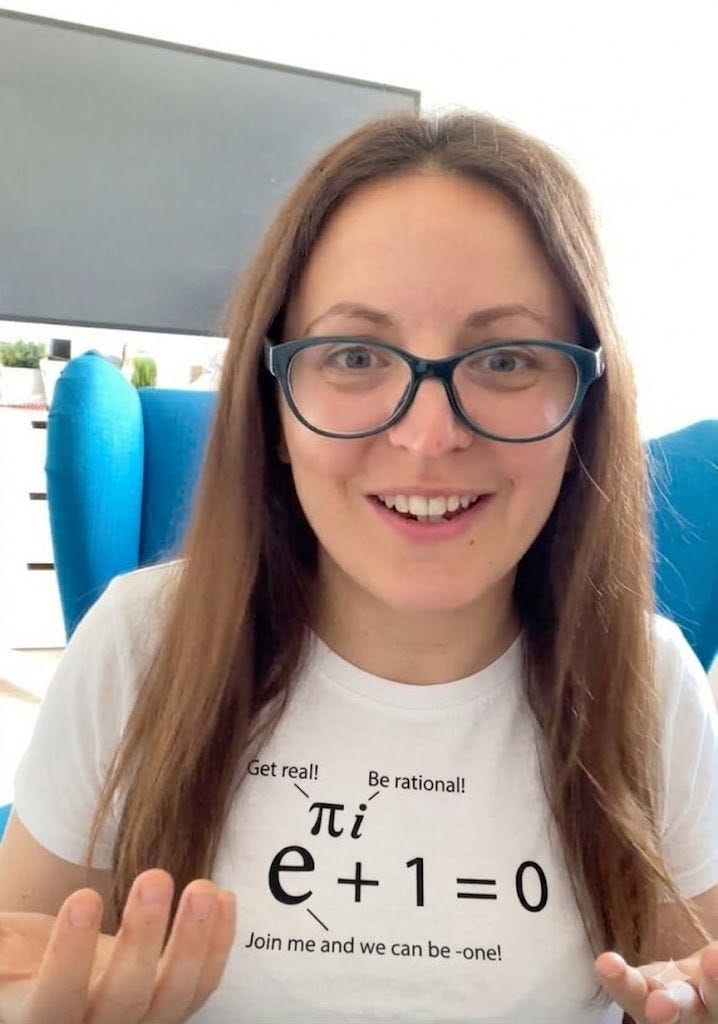
There is a quiet ritual most people perform on the last day of their formal high school or academic education. They walk out of their mathematics classroom, exhale slowly, and spend the rest of their adult lives congratulating themselves on never having to do it again.
This is an understandable feeling. It is also, I think, one of the more expensive mistakes a person can make.
The reason is not that you will need to solve a quadratic equation at a dinner party. You won’t. The reason is that mathematics, when it is taught well and received attentively, is not really about equations at all.
It is sitting with hard problems, distinguishing what you know from what you assume, for not being fooled by the world’s generous supply of numerical nonsense.
Mathematical illiteracy is not merely an academic inconvenience. It has consequences.
Consequential ones: people make worse medical decisions, worse financial decisions, worse political decisions, not because they are unintelligent, but because they have never been equipped with the cognitive tools that mathematics, quietly and steadily, builds.
John Mason, Leone Burton, and Kaye Stacey, in book “Thinking Mathematically”, described those tools differently: as habits of mind that emerge specifically from the experience of being stuck, trying things, noticing patterns, and eventually understanding. Not memorising; understanding.
What follows is my attempt to name those habits, 8 of them, and to explain why, in an era where AI has made calculation cheap, they have become the most valuable cognitive assets a person can possess.
1. Tolerance for being stuck and the discipline to keep moving anyway
Every real mathematical problem begins with the same sensation: not knowing what to do. This is not the beginning of failure. It is the beginning of mathematical thinking.
The question is never whether you will be stuck. The question is what you do next. Mathematical training, at its best, builds a repertoire of responses: try a simpler case, draw a diagram or sketch, restate the problem in different terms, look for a pattern in small examples. The technical name for this is specialising.
Most systems reward fast answers. A student who solves the problem first is the clever one. A student who spends 40 minutes on a problem and produces a partial solution is somehow failing. This is backwards. The 40-minute student, if they are thinking well, is building a capacity for productive discomfort that will serve them in every difficult situation they will ever encounter. The fast-answer student is often just retrieving a memorised procedure, and memorised procedures, in the current climate, are precisely what gets automated first.
2. Immunity to large-number illusions
We are designed, evolutionarily, to handle quantities up to perhaps a few hundred. Beyond that, the emotional sense of number breaks down entirely.
A million seconds (or 10^6 seconds) is approximately eleven and a half days. A billion seconds (or 10^9 seconds) is thirty-one years. These are not trivia facts. They are the difference between understanding a government budget line and being quietly misled by one. They are the difference between evaluating a company’s funding round and simply being impressed by the word “billion.”
Most people, when confronted with very large numbers, don’t evaluate them, they capitulate to them. The number is so large it must be significant. The number is so large it must mean something. Mathematics trains the opposite: always anchor a quantity to something you understand. Always ask what the number is per person, or over how many years, or compared to what.
3. Probabilistic thinking, or: how to stop being systematically wrong about risk
Innumeracy, is not simply arithmetic weakness. At its core, it is a systematic inability to reason about likelihood, and that failure costs lives.
People fear flying and drive instead, dying at substantially higher rates per journey. They see a cluster of cancer cases near a power plant and conclude causation, when elementary probability guarantees that random distributions will produce local clusters. They play the lottery because “someone has to win”; a sentence that contains a truth and buries a relevant calculation inside it.
Mathematical education is not the antidote because it makes everyone a statistician. It is the antidote because it instils a habit: before reacting to a risk, a pattern, or a coincidence, ask what probability would predict. The question “how likely is this, really?” costs nothing to ask and changes almost everything about the answer you reach.
4. Understanding coincidence, and why meaning is not evidence
Related to probabilistic thinking, but worth separating out: mathematics teaches you that surprising things are not the same as meaningful things.
The human mind is a pattern-recognition engine, built to find signal in noise. This was useful on the savannah. It is a liability in a world of large datasets, financial charts, and social media algorithms that serve you the one-in-ten-thousand event to get your attention.
The birthday paradox illustrates the gap precisely. In a room of 23 people, there is a 50% chance that 2 people share a birthday. Most people find this deeply counterintuitive, it seems impossible. Mathematics explains why it isn’t, and in explaining it, quietly recalibrates your sense of what coincidence actually implies.
Financial investing in panic, gambling, and most forms of superstition run on coincidence mistaken for causation. Mathematical literacy does not make you immune, but it raises the bar considerably.
“The question is never whether you will be stuck.
The question is what you do next.”
5. The art of asking the right question before answering the wrong one
One of the most important frameworks is deceptively simple: before attempting a problem, write down what you know, what you want, and what you might usefully introduce.
What it actually teaches is the prior skill of question formulation. Most of the poor decisions made in organisations are not made because people lack information. They are made because the question being answered is the wrong one. The budget discussion is actually a values discussion. The product debate is actually a customer-definition debate. The strategic disagreement is actually a disagreement about what success looks like.
Mathematics insists that you define your terms before you proceed. It insists that you state what you are actually trying to find. This sounds simple. In practice, it is rare enough to be a genuine competitive advantage.
6. The specialise-generalise loop: the engine of thinking
This is the deep structure of mathematical reasoning, and it maps almost perfectly onto the deep structure of every other kind of disciplined thinking.
You have a general problem. You try a specific case: something small and manageable where you can see what’s happening. You notice a pattern in that case, and perhaps in a few more. You conjecture a general rule.
Then, and this is the part most reasoning never reaches, you ask whether you can prove it, or whether you have simply been lucky with your examples.
It can be applied directly to product thinking, to scientific reasoning, to good journalism, to legal argument. In each domain, the error is the same: people skip from one example to a sweeping generalisation, without the intermediate step of testing whether the pattern is real or coincidental. The mathematician’s habit is to be excited by a pattern and suspicious of it simultaneously: to hold both reactions at once until the proof resolves them.
7. Regression to the mean: the most widely ignored pattern in human life
Regression to the mean is the statistical phenomenon by which extreme results tend to be followed by less extreme ones; not because of anything causal, but because extreme results are, by definition, rare.
A student has an exceptional exam, then a mediocre one. A sports team has a spectacular season, then a disappointing one. A fund manager beats the market three years running, then reverts. In each case, the temptation is to invent a narrative: the student became overconfident, the team lost its hunger, the fund manager’s strategy stopped working.
Sometimes these narratives are true. Often they are stories we impose on statistical noise. Mathematical education builds the habit of asking, before you construct the narrative: could this simply be regression to the mean? It is an uncomfortable question, because it often dissolves explanations we would prefer to keep. But it is almost always worth asking.
8. The discipline of proof
Mathematics has no equivalent of “I’m pretty sure.” You have a proof or you have a conjecture. You have a theorem or you have an observation. The line between them is sharp, and crossing it without warrant is not permitted.
In almost every other domain of human activity, this line is blurred beyond recognition. Opinions are stated as facts. Correlations become causes. Anecdotes become data. Intuitions become certainties. And the people holding the opinions, making the causal claims, citing the anecdotes, are in most cases entirely unaware that they have crossed the line.
Innumerate people, suffer not just from wrong answers but from unearned confidence, they don’t know what they don’t know, and that gap is precisely where bad decisions live. Mathematics education builds calibration. That is, in the end, the most valuable cognitive habit available to a person navigating a world that runs on false certainty.
The equations were never really the point. The definitions, theorems, worked examples, and problem sets were a delivery mechanism for something harder to name and more difficult to replace: a mind that has been trained to sit with difficulty, to question its own confidence, to look for patterns without being enslaved to them.
It was never about the equations, it was about building a mind that doesn’t fool itself.
P.S. Thank you for reading this far.
That alone puts you in rare company: most people scroll past anything that asks them to think slowly.
The fact that you’re here suggests you already value the kind of thinking this newsletter is about. Share it with someone who values it too. Those people are worth finding.
Until next week’s issue, keep learning, keep building, and keep thinking like a mathematician.
-Terezija
There is a superscript of Unicode U+207x which allows to type 10⁹ instead of 10^9. I will be writing about it tomorrow in "Unicode for Math Writing"
Great post, thanks :)